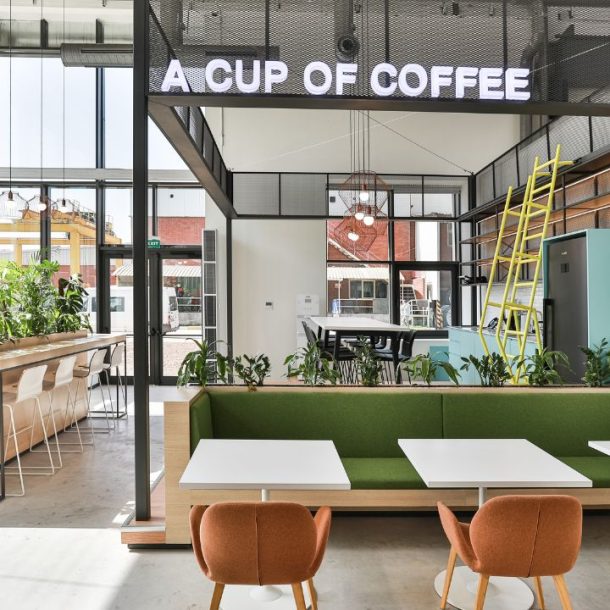
Office color trends in 2026 are no longer just an aesthetic preference; they have become a powerful design language that influences employees’ mood, productivity, and workplace relationships. Colors act as a quiet yet effective guide in environments where we spend a large part of our day. The right palette can transform an office from simply looking good into a space that feels calm, focused, and inspiring.
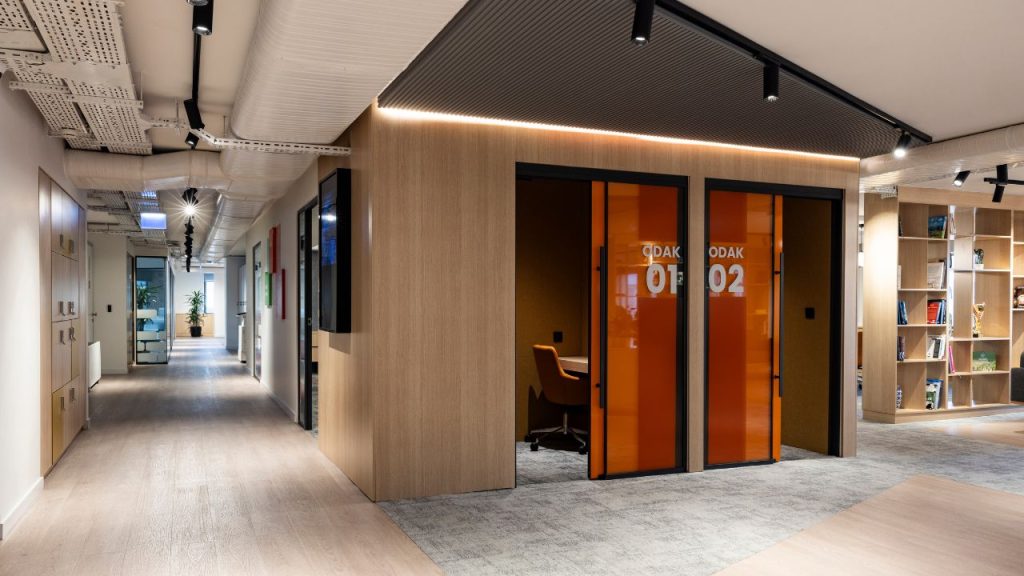
In recent years, the desire to reconnect with nature has also influenced office color palettes. Beige, clay, olive green, and soft browns do more than create a calm atmosphere, they also help reduce mental fatigue among employees.
What we often observe in many offices is this: teams working in intense environments do not just feel tired by the end of the day, they feel worn out. One reason for this is often the excess of spatial stimuli. Earth tones reduce this visual noise. When used on walls, acoustic panels, or natural wood surfaces, they create a sense that the space can breathe.
This palette is particularly ideal for open-plan offices and areas that require long periods of focused work.
Although pastel colors were once considered overly decorative, in 2026 they return with more matte, balanced, and sophisticated shades, becoming an essential element of creative workspaces. Colors such as pale lavender, mint green, powder pink, and light blue introduce a refreshing rhythm into the space.
These tones reduce visual intensity and promote mental comfort. During idea-generation processes, employees often feel freer to express themselves; in environments without harsh contrasts, creativity flows more naturally. The soft color language of the space also naturally supports communication within teams.
In creative studios, social areas, and brainstorming rooms, pastel palettes quickly make their presence felt, creating a more inviting, productive, and balanced atmosphere.
Some spaces aim to inspire confidence—executive offices, meeting rooms, or client reception areas. In these environments, dark blue and anthracite tones create a strong character.
Deep blues are associated with trust and determination in the human mind. At the same time, they do not distract attention. When used with matte textures rather than glossy finishes, they add a sophisticated depth to the space. Combined with natural light, these tones create a balanced atmosphere rather than a heavy one.
In offices with a strong corporate identity, this palette remains indispensable.
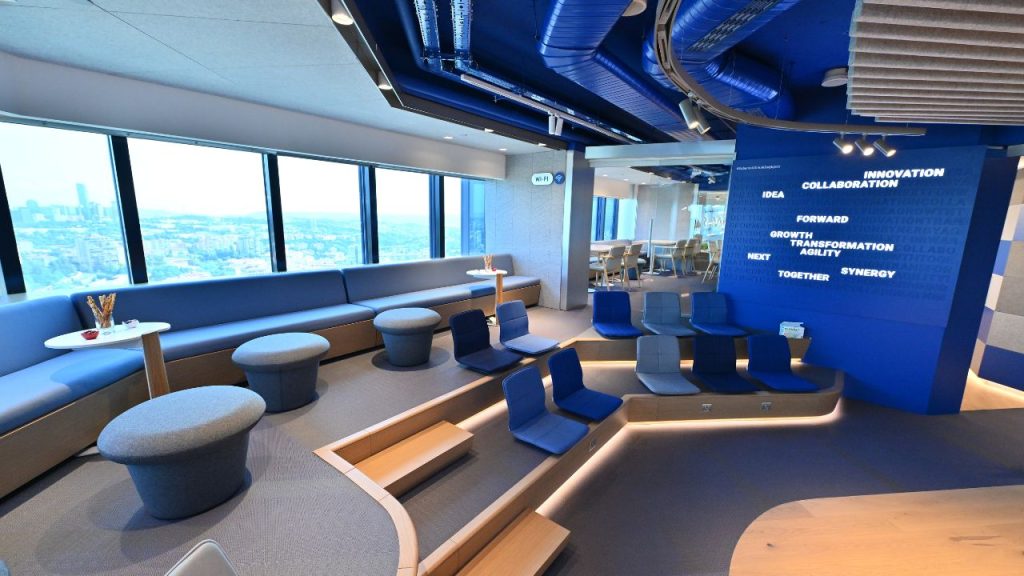
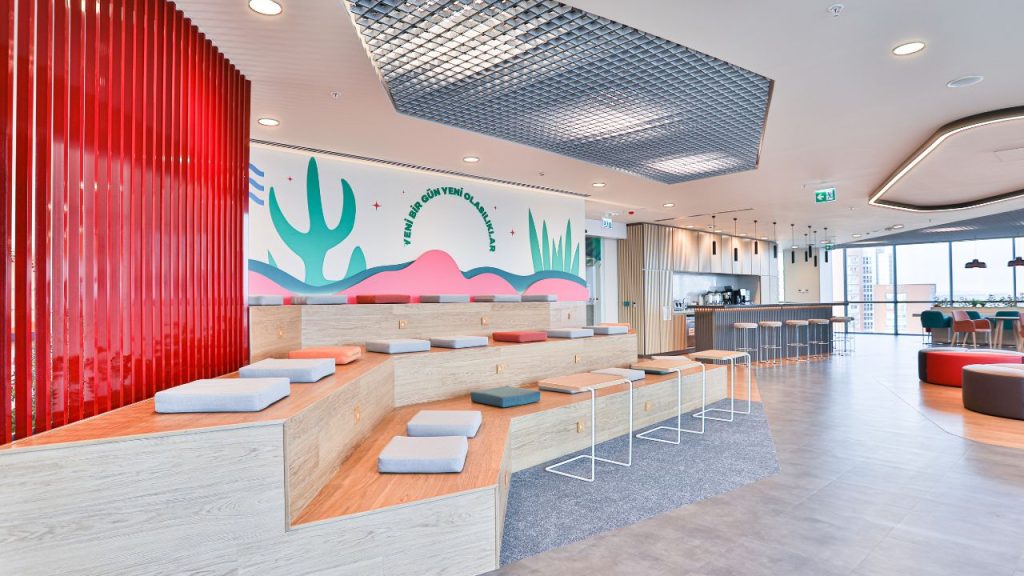
Not every area in an office needs the same energy. Some spaces benefit from movement and interaction, coffee corners, waiting areas, and shared work tables. This is where terracotta, mustard, and rust tones come into play.
These warm colors encourage conversation and bring people together. In relaxation areas used after long meetings, they add vitality to the space. Even a small wall surface or a single piece of furniture can change the atmosphere significantly.
In 2026 office design, accent colors are expected to be used more intentionally and strategically.
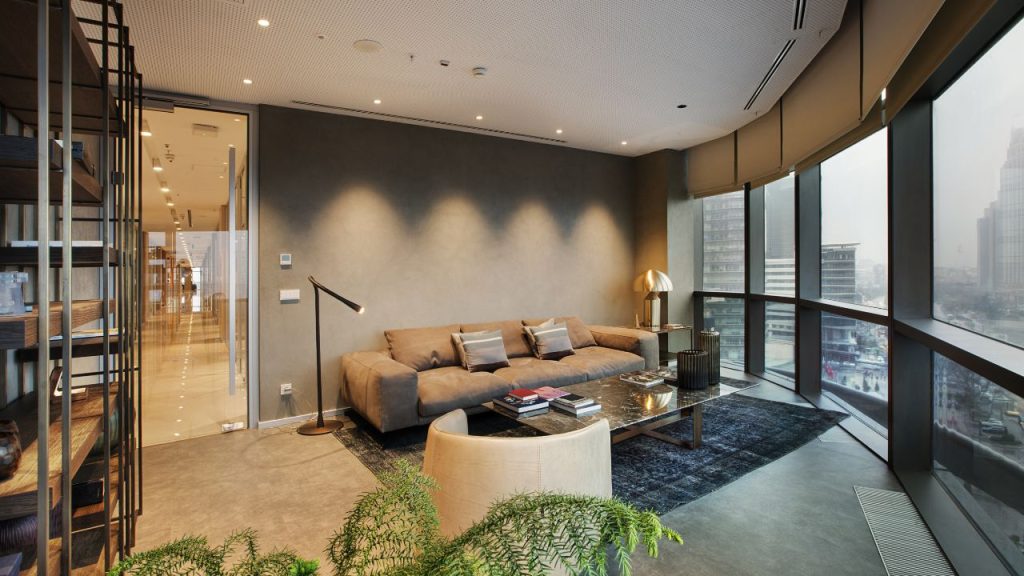
Grey and white palettes are timeless classics that never truly go out of style. However, in 2026 this minimal approach is being reinterpreted with warmer undertones.
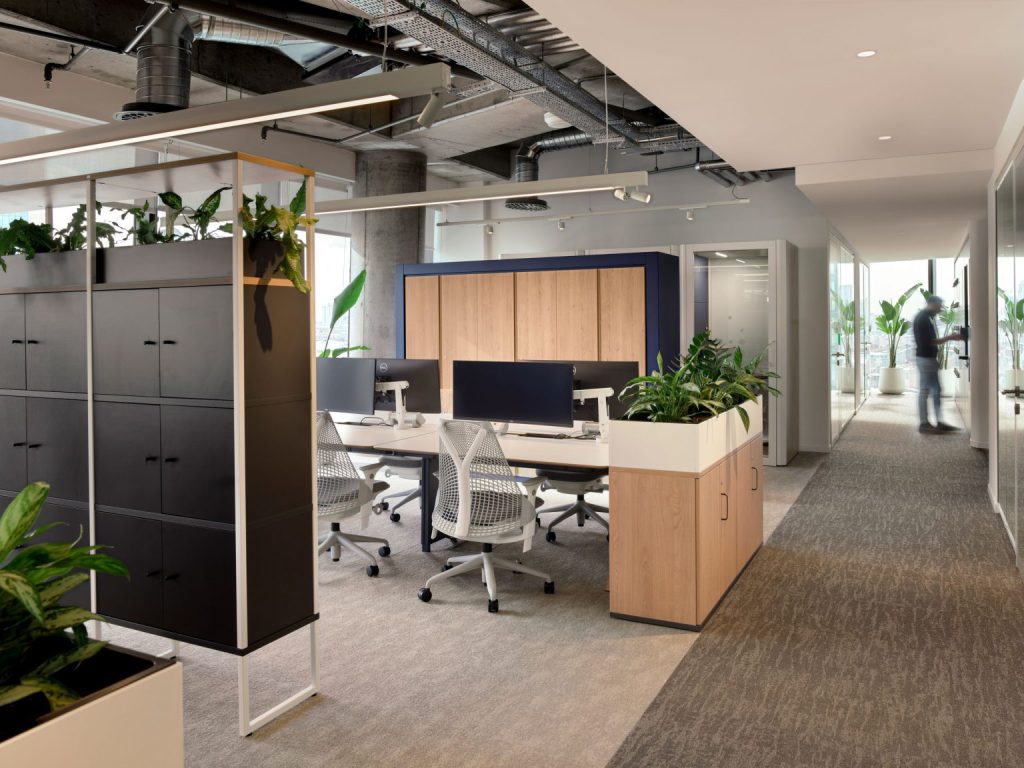
Cool whites are gradually being replaced by cream and stone tones. Grey surfaces are combined with textured materials, allowing minimal offices to feel less sterile and more livable. When paired with plants, textiles, and soft lighting, simplicity transforms into a calming quality.
Minimal palettes remain one of the strongest solutions for technology offices and hybrid work environments.
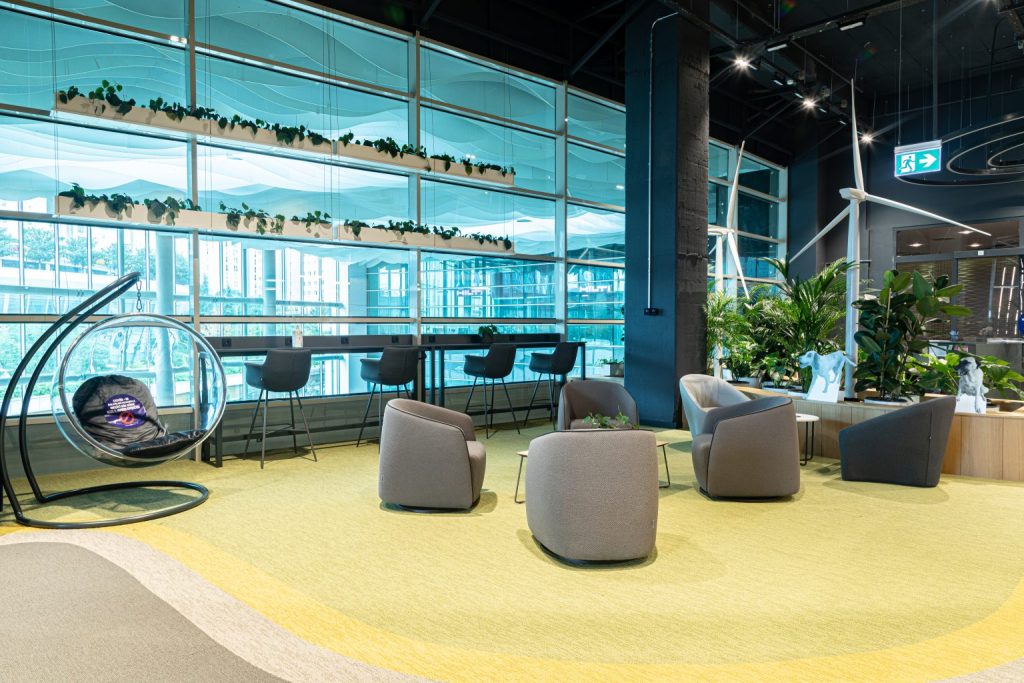
One of the strongest messages of 2026 is clear: offices that reconnect people with nature create healthier teams. For this reason, different shades of green are gaining popularity—sage, eucalyptus, and moss tones among them.
Green tones help regulate heart rate, reduce eye fatigue, and lower stress levels. When combined with plants, they transform the atmosphere of a space. Employees can maintain focus for longer periods and tend to make fewer errors.
In offices without windows, green palettes can create a particularly noticeable improvement.
Every company has a different culture. When selecting a color palette, it is important to consider not only what is trendy but also how teams work. Quiet, analytical teams often feel more comfortable in neutral tones, while creative teams may thrive in more colorful environments.
Successful office design emerges from the thoughtful integration of color, light, acoustics, and materials. For this reason, color choices should always be tailored to each specific project.
For more insights on workplace design, you can also explore our blog posts:
Office color trends in 2026 focus less on aesthetics and more on the human experience. The right palettes can subtly yet powerfully influence employee wellbeing, team communication, and productivity. Even small color touches can transform the spirit of a workplace.
For more detailed information, you can also explore our projects.