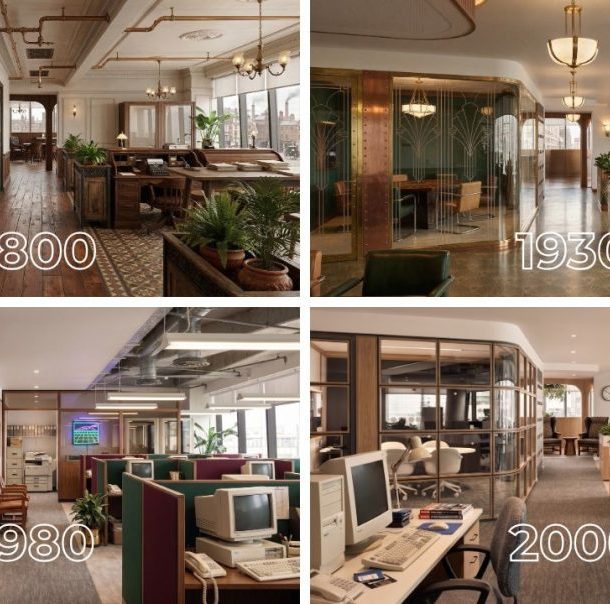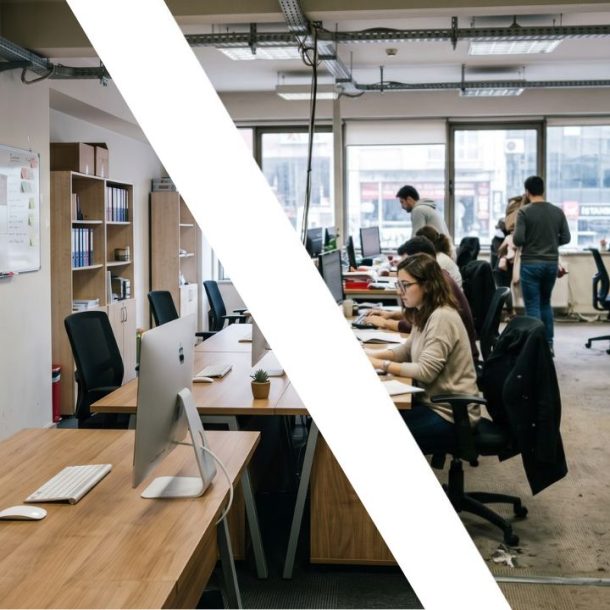

Balancing heritage preservation with modern commercial needs is a defining challenge for today’s occupiers. Deploying adaptive reuse in London offers a brilliant solution, transforming historic structures into future-ready workspaces. This approach allows businesses to meet strict corporate ESG targets while retaining authentic architectural character. In this guide, Diem UK highlights the key trends driving this sustainable urban evolution.
The Sustainable Power of Adaptive Reuse in London
Retrofitting older properties preserves a city’s narrative while drastically reducing embodied carbon emissions. Instead of demolition, reusing existing structural fabrics provides distinct competitive and environmental advantages:
Unique Character: Original brickwork and high ceilings offer an aesthetic that new-builds cannot replicate.
Carbon Mitigation: Maximizing structural preservation aligns perfectly with modern sustainability metrics.
Prime Locations: Historic structures often occupy highly coveted commercial hubs across the capital.
5 Trends Breathing New Life into Historic Structures
Navigating heritage design requires a delicate balance of spatial empathy and cutting-edge engineering. Here are the five most influential trends dominating the London retrofitting landscape:
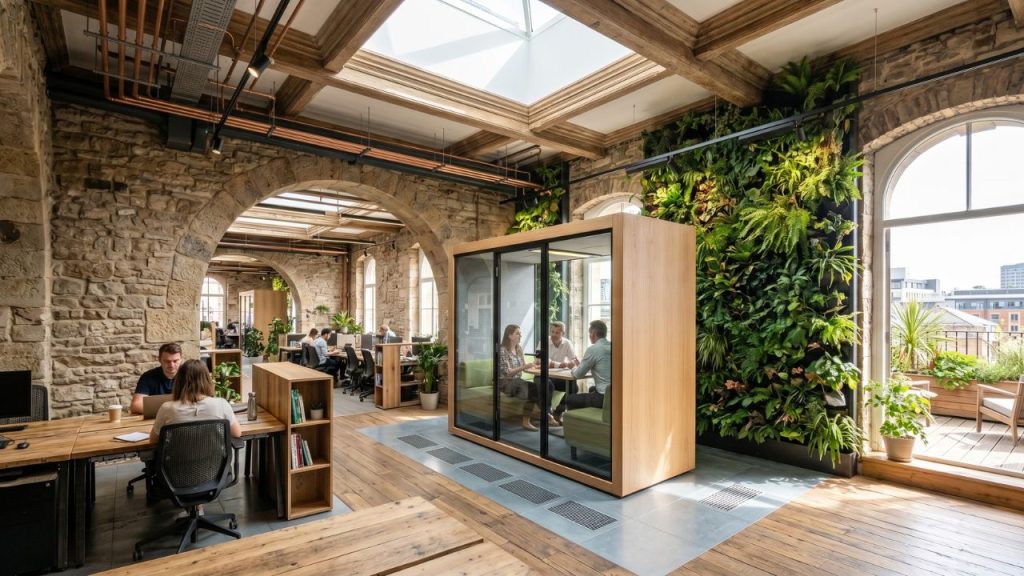
Biophilic Design: Introducing vertical gardens and pocket terraces to bridge old stone structures with nature.
High-Performance Fit-Outs: Installing self-supporting acoustic pods and modular rooms without altering the building’s historic core.
Intelligent MEP Integration: Utilizing underfloor air distribution and exposed ductwork to protect heritage plasterwork.
Circular Economy Principles: Incorporating low-carbon, reclaimed materials to complement the building’s sustainable shell.
Maximizing Natural Light: Using smart glass partitions and central atriums to boost daylight in deep floorplates.
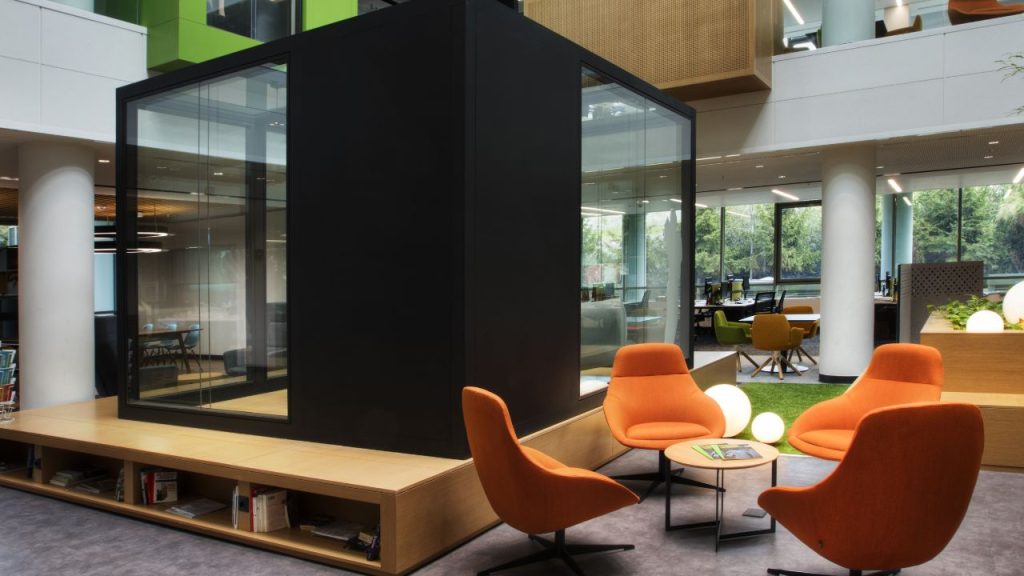
Navigating Compliance and Heritage Practice
Converting heritage buildings involves strict regulatory frameworks, including Listed Building Consent and local planning guidelines. Success relies on proactive collaboration with heritage bodies right from the initial concept phase.
To explore how modern workspaces are evolving to capture a vibrant, social energy, read our analysis on The Third Place Paradox: Why the Modern Office Must Compete with the Café. For a deeper look into how interior aesthetics merge with employee well-being, explore our guide on Office Color Trends 2026: 6 Palettes That Strengthen Workplace Psychology.
Conclusion
Adaptive reuse successfully honors London’s rich history while delivering carbon-conscious commercial workspaces for tomorrow. By blending smart engineering with heritage preservation, businesses can occupy high-performance offices with a unique story. This concise overview outlines the essential strategies required to transform historic assets into sustainable corporate environments.
Ready to transform your heritage property into a next-generation workspace? Contact our expert team at Diem UK today.