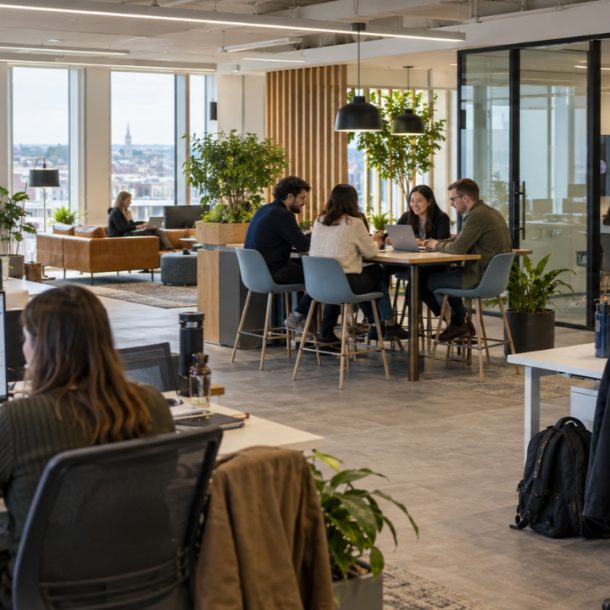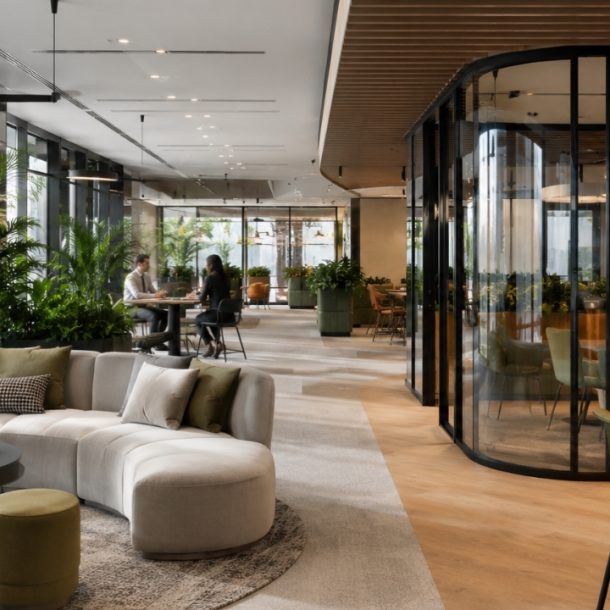

Imagine arriving at the office one morning to find the main chiller out of order, the phones ringing nonstop, and employees flooding you with complaints. It is one of the most familiar nightmares in facility management. Smart facility management with digital twins transforms buildings from cold concrete structures into living organisms that speak your language and monitor their own vital signs. Discover five transformative steps that can help your facility prevent crises before they occur instead of merely responding to them.
Traditional facility management has always focused on solving problems after they occur: a pipe bursts, a technician is called; the energy bill soars, a meeting is held. However, today’s vast buildings with hybrid working models, fluctuating occupancy levels, and high energy consumption can no longer afford this sluggish approach.
A digital twin is a living simulation that brings every detail of your building, from its architecture to the smallest cable running through it, onto your screen. It answers not only the question, “What is happening right now?” but also, “Will the air handling unit be able to handle the load when the temperature reaches 35°C tomorrow?” Buildings can finally begin to communicate their needs to facility managers.
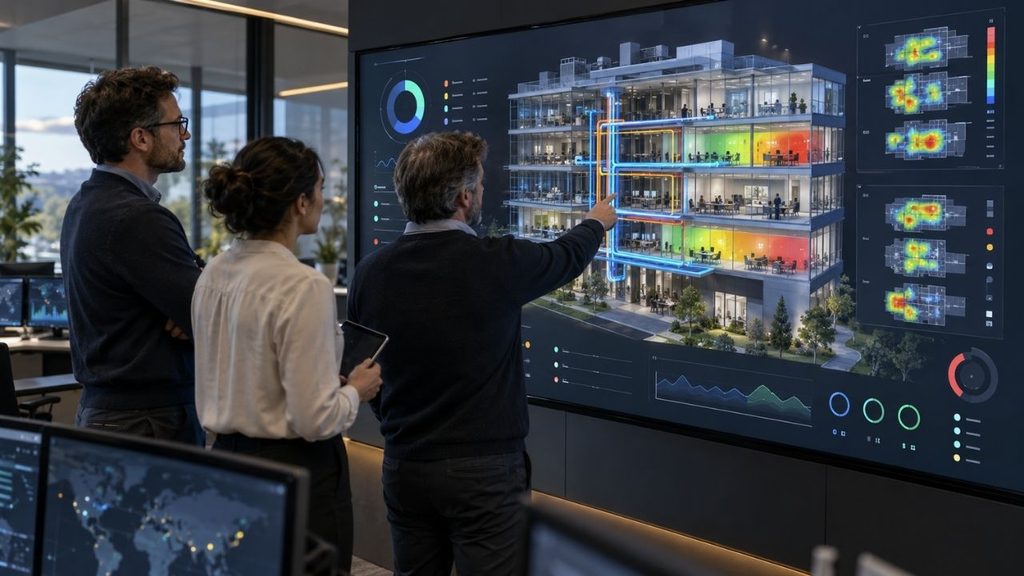
To understand what a building is experiencing, you must first equip it with receptors that allow it to sense its environment. IoT sensors function like invisible nerve endings distributed throughout the building.
When all these small clues are transmitted to a central system through wireless networks, the days of operating blindly are over. To build a facility infrastructure that reduces environmental impact and intelligently monitors energy and resource consumption, discover ourca izleyen bir tesis omurgası oluşturmak için Diem ESG Sustainability Services approach.
Think of the extensive architectural drawings that are placed on archive shelves or forgotten deep inside a folder once construction is complete. In the world of digital twins, these static BIM models are taken off the shelf and brought to life.
To find out how you can achieve digital efficiency from the design and modelling stage right through to on-site operations, take a look at our blog post, ‘7 Strategies for a Cost-Effective and Efficient Fit-Out’ .
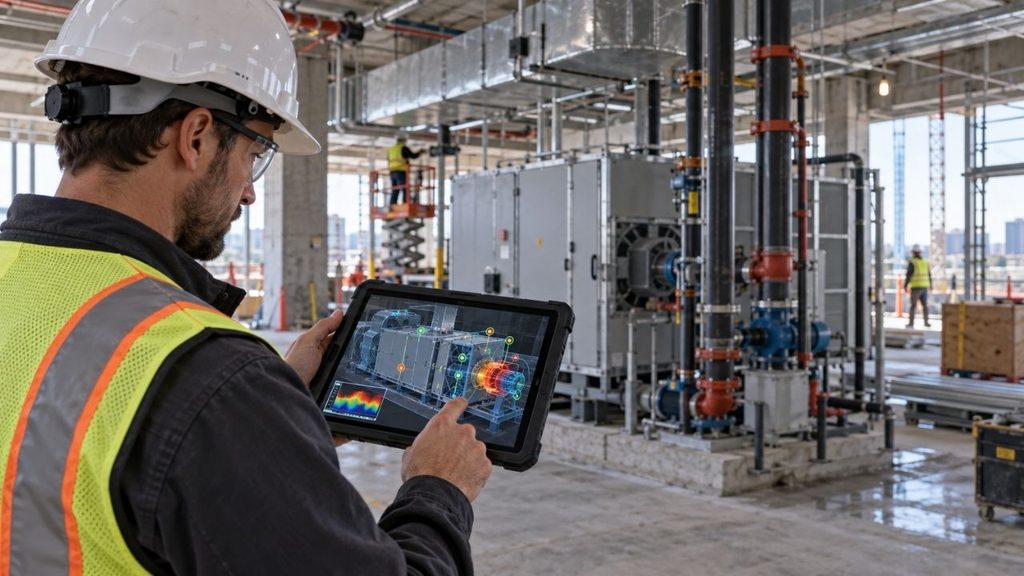
The “run it until it breaks” approach is the most expensive maintenance strategy. Replacing a component simply because the maintenance schedule says so, even when there is no actual problem, can also quietly drain the budget. Through predictive maintenance, digital twins eliminate both of these costly approaches.
| Facility Maintenance Approach | When Does It Intervene? | Impact on the Budget | Occupant Experience |
| Firefighter Mode (Reactive) | When equipment fails and stops operating | High costs and emergency spare-part shortages | Overheated or freezing offices and disrupted operations |
| Calendar-Based (Preventive) | When a set number of operating hours or months has passed | Premature component replacement and unnecessary servicing | Consistent service, but with unpredictable risks |
| Digitally Intuitive (Predictive) | When the first signs of wear appear | Minimum costs and maximum efficiency | Uninterrupted comfort with no surprises |
AI-powered analytics can identify microscopic friction in the main circulation pump weeks before anyone can hear it and send a notification to the team’s dashboard saying, “Lubricate me next Tuesday during a quiet period.”
Empty corridors illuminated unnecessarily and freezing meeting rooms with no occupants do more than increase energy bills. They also weaken a company’s sustainability performance. A digital twin balances the facility’s energy consumption with real-life usage.
Global research by the International Energy Agency (IEA – Digitalisation and Energy) shows that smart control systems can directly reduce energy bills in commercial buildings by 10–20%.
If you are curious about how sustainability criteria can fundamentally transform a building’s value, our article Sustainable Construction: Designing Buildings in Line with ESG Criteria offers the insights you are looking for.
One of the greatest advantages of a digital twin is that it provides a risk-free environment where you can confidently test the question, “What would happen if we did this?” There is no need to demolish walls or move desks to see how a floor plan would respond when a new department moves in.
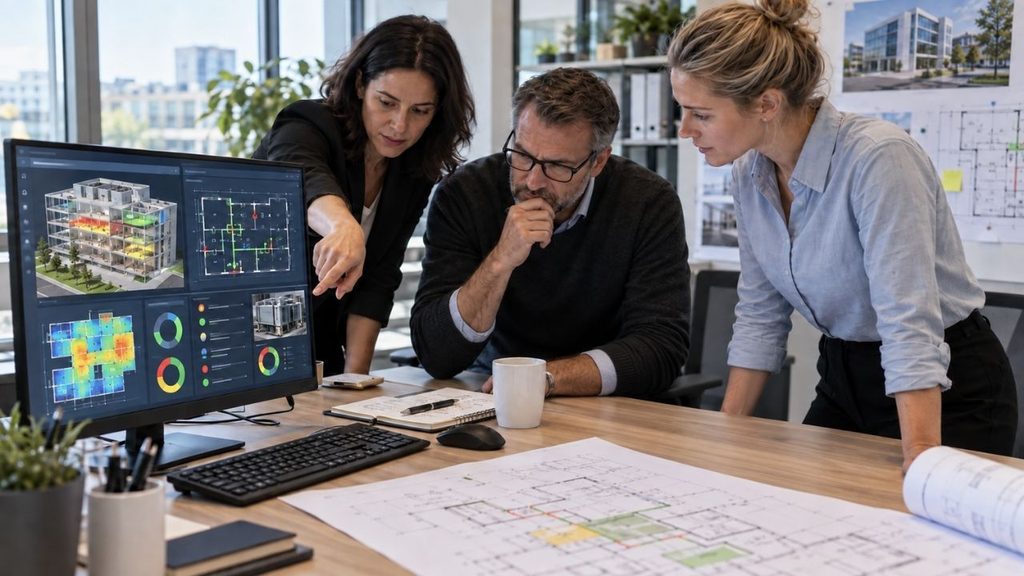
Smart facility management with digital twins transforms buildings from complex structures that burden their managers into intelligent partners capable of continuously optimising themselves. By detecting subtle vibrations at an early stage and preventing failures before they occur, this approach protects your budget while creating a consistently comfortable environment for employees. Do not leave the future of your facility to chance; equip it with the power of data and digital simulations.
Contact us to transform your facility into an intelligent building that monitors, anticipates and saves.